

In what situations would I use an expansion joint?
Many manufacturers experience a frustrating cycle: the same pump fails repeatedly. Even when the pump has been properly repaired, installed, and aligned, chronic vibration issues persist. A closer look often determines that the vibrations are not emitted from the pump itself, but are traveling along the pipes from other equipment. What can be done to stop these rogue vibrations? A piping expansion joint is the essential solution.
What is a piping expansion joint?
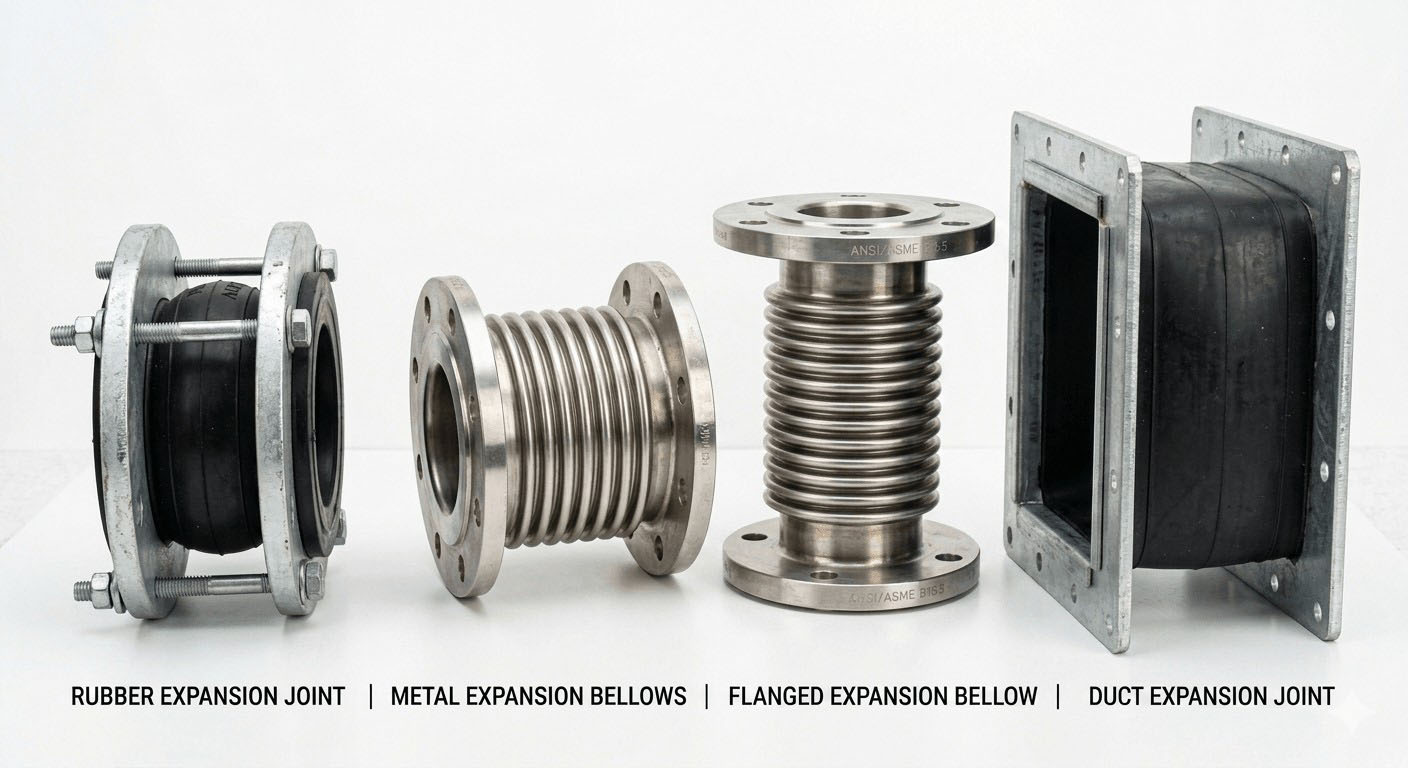
An expansion joint is installed in piping systems for multiple reasons. Not only are they used to absorb vibration and shock, but they also relieve anchor stress, reduce noise, and compensate for misalignment. Certain expansion joints are specifically designed for thermal expansion in high-temperature applications.
Expansion joints allow pipes to move in three distinct ways:
- Axial: Compression or extension along the centerline.
- Lateral: Offset movement parallel to the centerline.
- Angular: Bending movement around the center point.
What are the common materials for expansion joints?
- Metal: Primarily used where thermal expansion is a major issue. As the pipe temperature increases, the metal joint compresses to compensate for movement, taking stress off anchors and piping.
- Rubber: In addition to handling thermal expansion, rubber absorbs vibration and shock waves extremely well. This makes it ideal for minimizing noise and vibration transfer to protect sensitive equipment like pumps. They also act as shock absorbers to minimize trauma caused by water hammer and pressure surges.
- Braided: Stainless steel braided hoses act more as flexible connectors. They perform well in high-pressure and high-temperature applications requiring vibration dampening or misalignment compensation, effectively eliminating thrust loads on equipment nozzles.
Why are expansion joints indispensable?
In summary, the primary reasons expansion joints are essential in a piping system include:
- Compensating for thermal expansion and contraction.
- Solving initial piping misalignment and lateral offsets caused by settlement.
- Isolating vibrations from pumps and other powered equipment.
- Absorbing shock and bending loads to ensure system safety.
If you are looking for high-quality rubber expansion joints for your next project, contact our engineering team for a customized quote.