



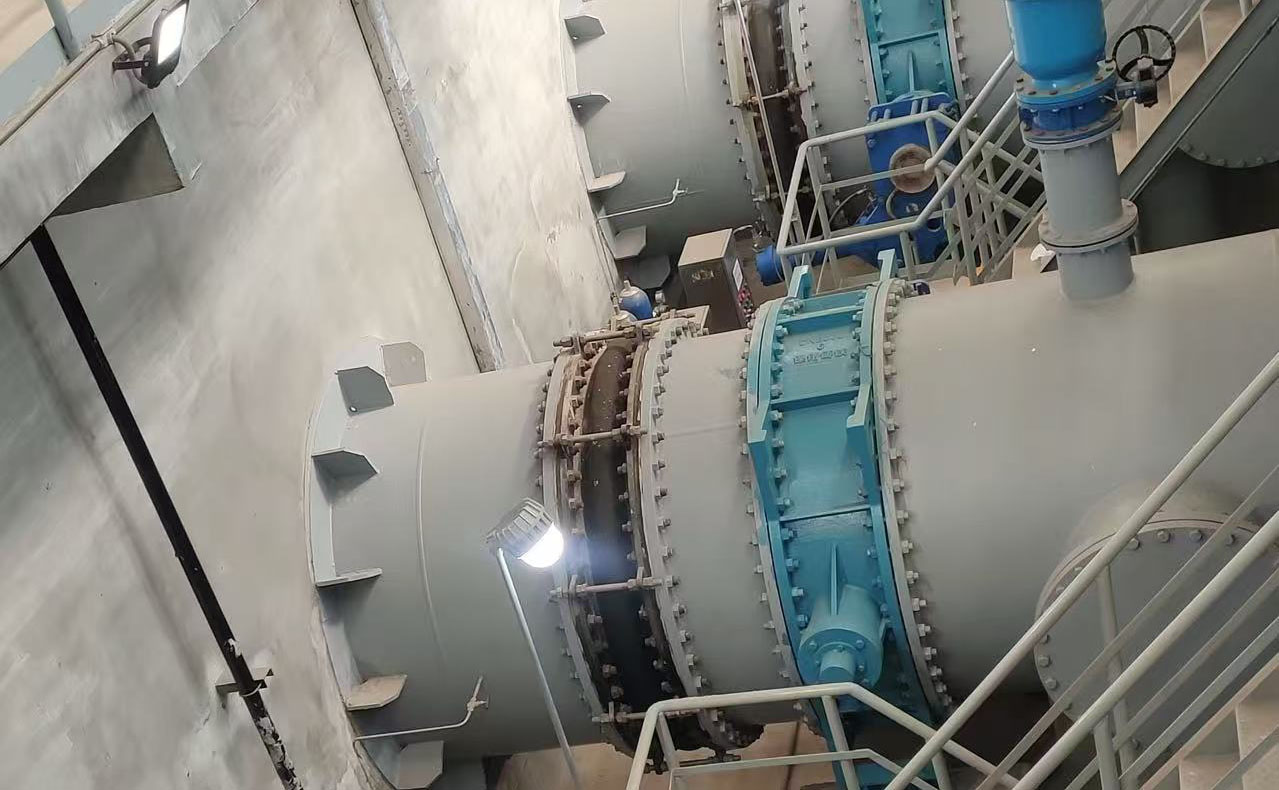
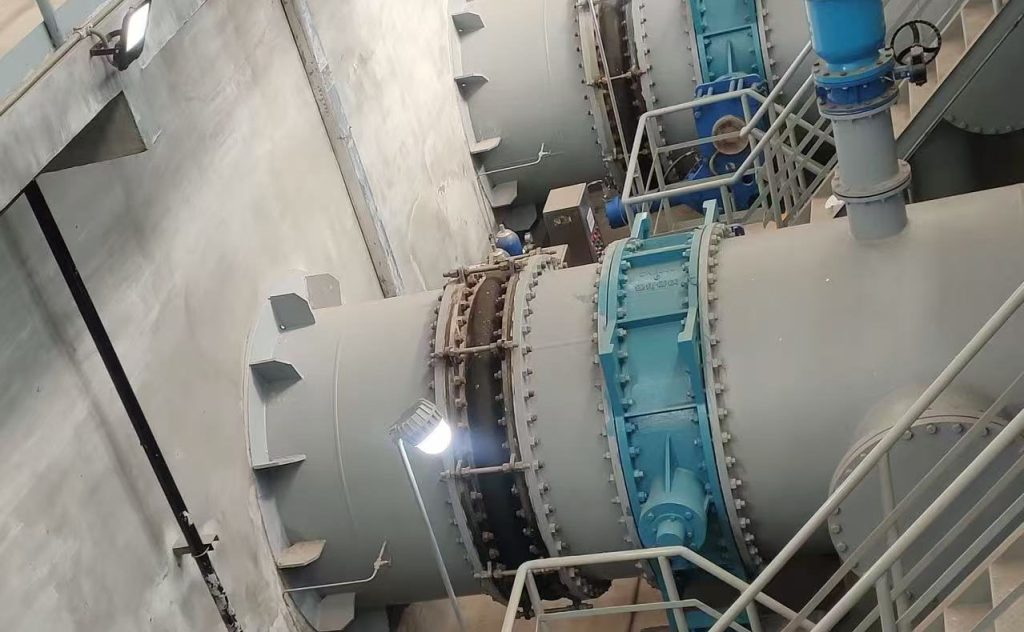
In utility-scale thermal and nuclear power generation plants, circulating cooling water and condenser cooling networks function as the primary thermal sink. Managing fluid dynamics across large-diameter ($DN1000$ to $DN2800$) piping infrastructures introduces major structural engineering risks. These expansive pipelines operate under massive volumetric flows and are continuously subjected to severe mechanical vibration from high-capacity pumps, non-uniform structural settlement, and shifting thermal expansion vectors. Deploying engineered, heavy-duty Rubber Expansion Joint assemblies is critical to safeguard expensive condenser shells, eliminate residual flange stresses, and maintain strict pressure boundaries.
1. On-Site Mechanical and Structural Pain Points
Large-diameter circulating water infrastructures present distinct physical and chemical stress profiles that rapidly compromise low-grade flexible pipe connections:
- Dynamic Pump Vibration and Flange Fatigue: High-volume circulation pumps generate continuous high-frequency hydraulic pulsations and mechanical thrust. Unisolated vibrations migrate down the pipeline, causing micro-fractures in concrete anchor blocks and premature fatigue failure along rigid flange bolting configurations.
- Uncontrolled Elongation and Hydrostatic Thrust: Under working pressure parameters ($PN6$ / $PN10$), ultra-large-diameter joints generate massive hydrostatic end thrust forces (blind plate forces). Without robust mechanical constraints, the piping network can experience catastrophic longitudinal pulling-apart.
- Condenser Vacuum Instability: Condenser connection interfaces operate under continuous high-vacuum environments. Standard elastomeric bellows lack internal reinforcement, causing the inner liner to suck inward, leading to catastrophic bellow rupture or vacuum loss that degrades power generation efficiency.
- Structural Settlement and Seawater Corrosion: Inter-building piping lines running between cooling towers and pump houses are vulnerable to soil shifting and foundation settlement. Concurrently, if once-through seawater or highly chlorinated cooling water is used, internal galvanic corrosion accelerates along standard metallic joints.
2. Circulating Water System: Application Configuration Matrix
| Power Plant Deployment Zone | Critical Operating Stresses | Engineered Joint Specification |
|---|---|---|
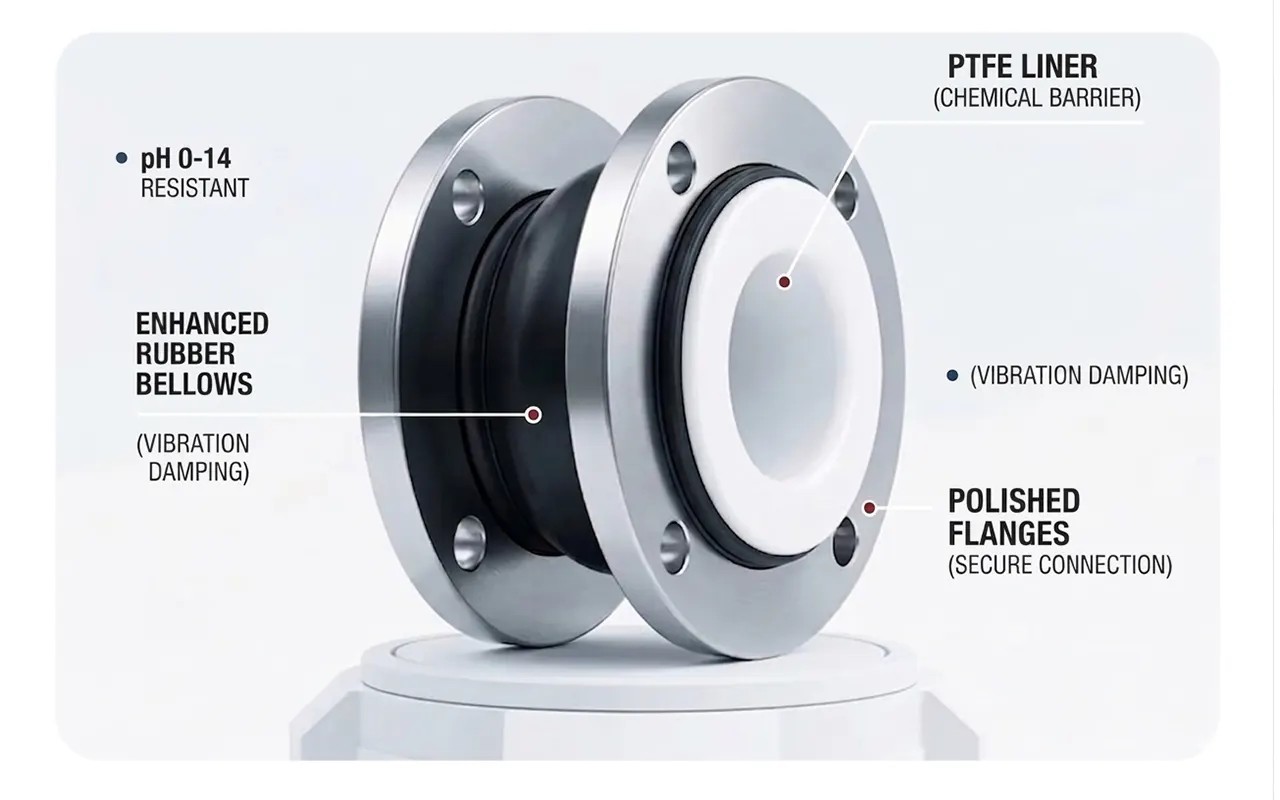
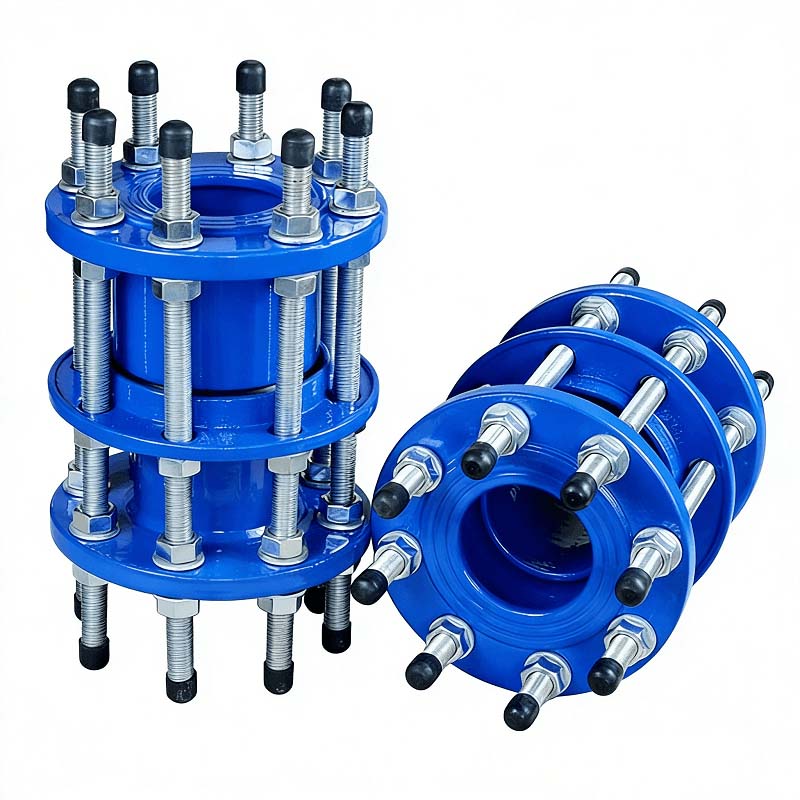
| Circulating Pump Inlet / Outlet | Severe mechanical vibration, high directional velocity, hydraulic water-hammer risks. | Heavy-duty single-sphere bellows equipped with a full-length structural control rod unit assembly to restrain pressure end-thrust. |
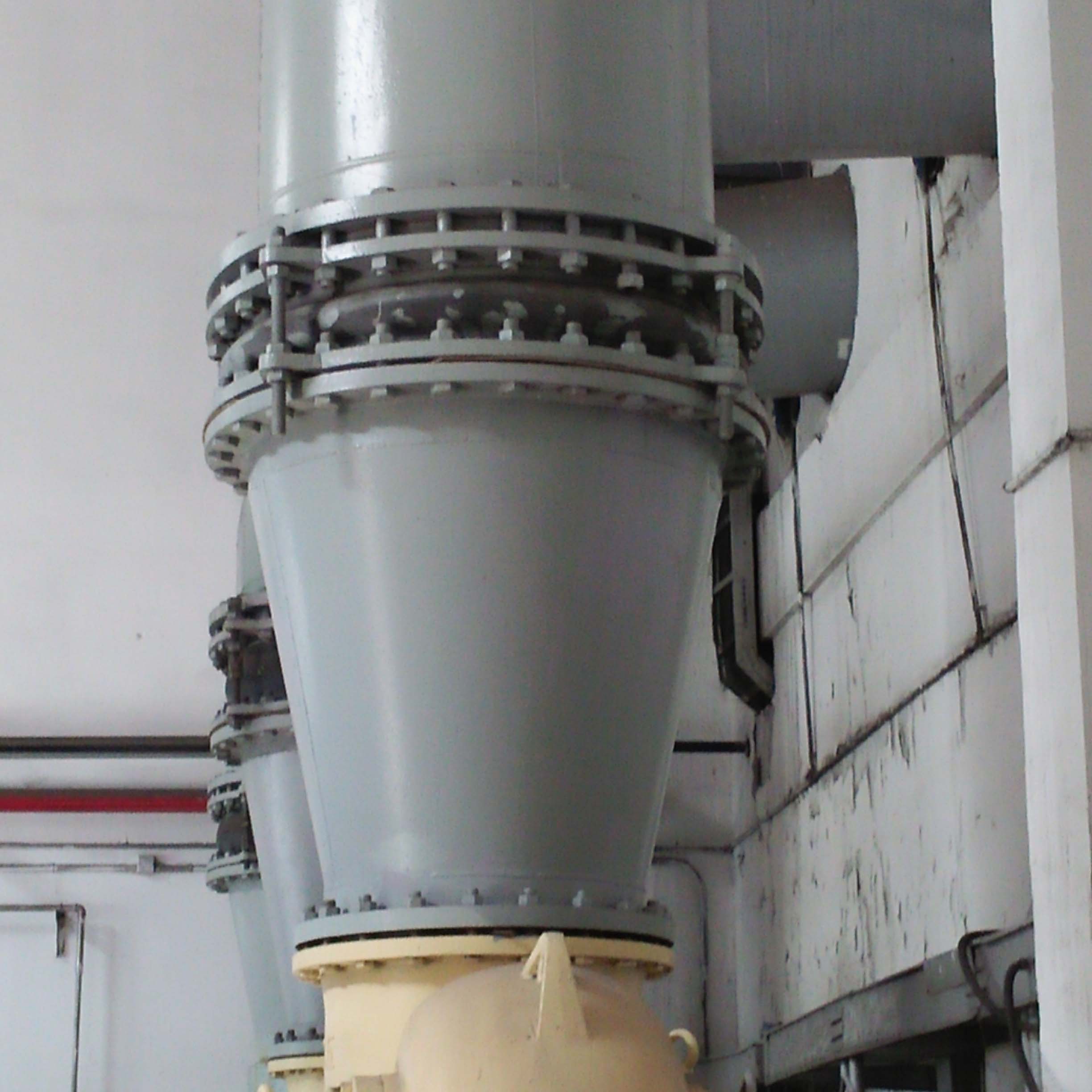
| Steam Condenser Interface | Continuous high-vacuum service, tight spatial boundaries, zero-leakage mandates. | Fully sealed single-sphere configuration integrated with custom internal Stainless Steel (SS316L) solid vacuum support rings. |
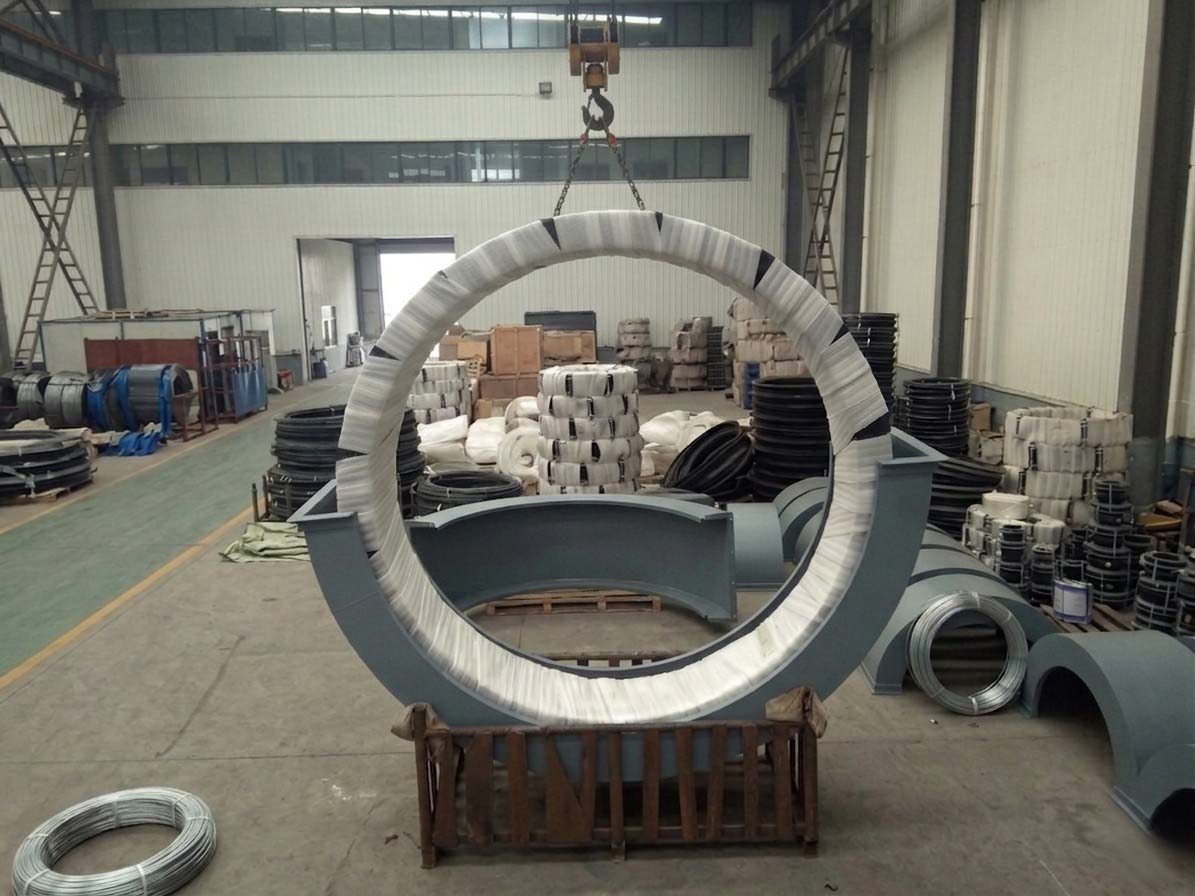
| Cooling Tower Pipelines | High multi-axis lateral offset caused by soil settlement and seasonal temperature shifts. | Large-diameter ($DN1000$-$DN2800$) high-elasticity single or double sphere joints designed for maximum lateral and angular compensation. |
3. Technical Material Science and Mechanical Integrity
DEVEL-series circulating water flexible connectors utilize precision-formulated elastomer matrix designs engineered specifically for long-term power utility deployment:
Advanced Metallurgy and Elastomer Blending: The inner tube liner is molded from premium, high-grade Ethylene Propylene Diene Monomer (EPDM) or Chloroprene Rubber (CR). This guarantees complete chemical inertness against aggressive chlorine biocides, dissolved oxygen, mineral scaling, and high-salinity seawater environments, achieving a verified continuous service life exceeding 8 years.
Aramid Cord Reinforcement Architecture: To resist pressure surges within large-diameter configurations, our structural core replaces generic polyester fabric with multiple layers of bias-ply, high-tenacity aramid (Kevlar-grade) synthetic cord. This premium matrix achieves an exceptional strength-to-weight ratio, ensuring zero ballooning or material fatigue under continuous dynamic pressure load profiles.
Integrated Thrust Restraint Technology: For pipelines lacking rigid structural backing, DEVEL configures heavy-duty mechanical limit bolt control units. Gusset plates are secured directly behind the rotating metal flanges, and high-tensile tie rods are calibrated to prevent over-elongation under structural shifts, ensuring the joint remains firmly within its safe structural movement envelope.
4. Field Compliance, Installation, and Life-Cycle Engineering
DEVEL large-diameter rubber joints are designed in strict accordance with the internationally recognized guidelines of the Fluid Sealing Association (FSA) Elastomeric Expansion Joint Division and ASME B31.1 Power Piping Codes. Our technical service lifecycle includes detailed site geometric reviews and pipeline stress mapping to establish accurate face-to-face installation limits. Quality assurance protocols force mandatory 100% factory inspection, including batch durometer hardness mapping, dimensional tolerance verification, and hydrostatic pressure verification up to 1.5 times the maximum system design pressure prior to final site deployment. All backing flanges are machined with precision bolt configurations matching ASME Class 150, EN1092-1, or DIN criteria, utilizing hot-dip galvanized carbon steel or passivated stainless steel.
5. Engineering Collaboration and Asset Optimization
DEVEL is a precision manufacturer of critical fluid control and piping components, delivering tailored engineering solutions over catalog parts. Our dedicated industrial design division cross-analyzes complex pipeline layouts, dynamic cycle frequency counts, flow velocity indices, and medium corrosivity profiles to model optimized single-ply, multi-ply, or externally pressured compensator networks. Engineering procurement firms, EPC contractors, and plant maintenance engineers can transmit specialized pipeline drawings and datasheet criteria directly to our industrial engineering department for technical evaluation and structural compliance mapping.