


In high-pressure thermal piping, steam transmission lines, and chemical processing plants, Metal Expansion Joints (metallic bellows expansion joints) are critical components engineered to accommodate severe thermal elongation and isolate structural vibrations. However, due to the aggressive nature of high-velocity fluids and high cyclic thermal stresses, these components are highly vulnerable to localized leakage. Preventing premature boundary breaches requires a deep mechanical and metallurgical understanding of the system’s failure modes. This technical guide provides an engineering-level analysis of leakage root causes and outlines precise corrective strategies in accordance with global piping codes.
1. Primary Leakage Failure Modes in Metallic Bellows
Unlike elastomeric flexible connectors, leakage in a metallic expansion joint rarely stems from simple packing degradation. Instead, failures are typically governed by complex mechanical fatigue and environmental chemistry:
- Stress Corrosion Cracking (SCC): In systems conveying media laden with chloride ions ($Cl^-$) or operating under high sulfur dew-points, standard austenitic stainless steels (such as SS304) experience rapid, unpredicted transgranular cracking. This electrochemical attack targets localized zones under residual tensile stress, such as the cold-worked crests and roots of the bellows convolutions.
- Structural Pull-Out and Anchor Failure: When system operating pressures rise, unconstrained or improperly anchored piping networks generate immense hydrostatic end thrust (blind plate forces). If the pipeline lacks heavy structural anchors, the bellows convolutions will over-elongate beyond their plastic deformation limits, leading to instantaneous tensile tearing or flange separation.
- Mechanical Fatigue and Vibration Weld Defects: Micro-pores, slag inclusions, or uneven grain boundary alignment within the longitudinal weld line of the bellows blank create severe stress concentration points. Under continuous high-frequency vibration from upstream pumps or compressors, these micro-defects propagate into macroscopic fatigue cracks.
2. Failure Analysis Matrix: Leakage Profiles vs. Engineering Countermeasures
| Leakage Failure Profile | Root Mechanical / Metallurgical Cause | Engineered Corrective Countermeasure |
|---|---|---|
| Intergranular / Stress Corrosion | Chloride ion pitting or acid condensation attacking standard stainless steel grains at elevated temperatures. | Upgrade metallurgy to stabilized grades (SS321, SS316L) or high-nickel superalloys (Inconel 625 / Hastelloy C276) combined with solution annealing. |
| Bellows Over-Extension | Axial displacement exceeding the designed expansion envelope, leading to structural geometric deformation. | Deploy fully restrained or limit-type expansion joint configurations integrated with high-tensile structural limit rods and gusset plate assemblies. |
| Weld Seam Fatigue Cracking | Micro-porosity or micro-fissures within the weld pool propagating under high-frequency acoustic or mechanical vibrations. | Enforce automatic plasma arc welding procedures backed by 100% radiographic (RT) and liquid dye-penetrant (PT) non-destructive testing. |
3. Proactive Leak Prevention: Manufacturing and Field Best Practices
To reduce life-cycle maintenance costs and mitigate unplanned plant shutdowns, pipeline designers and procurement teams must implement strict quality control boundaries during the engineering phase:
I. Mechanical Thrust Restraint with Control Units
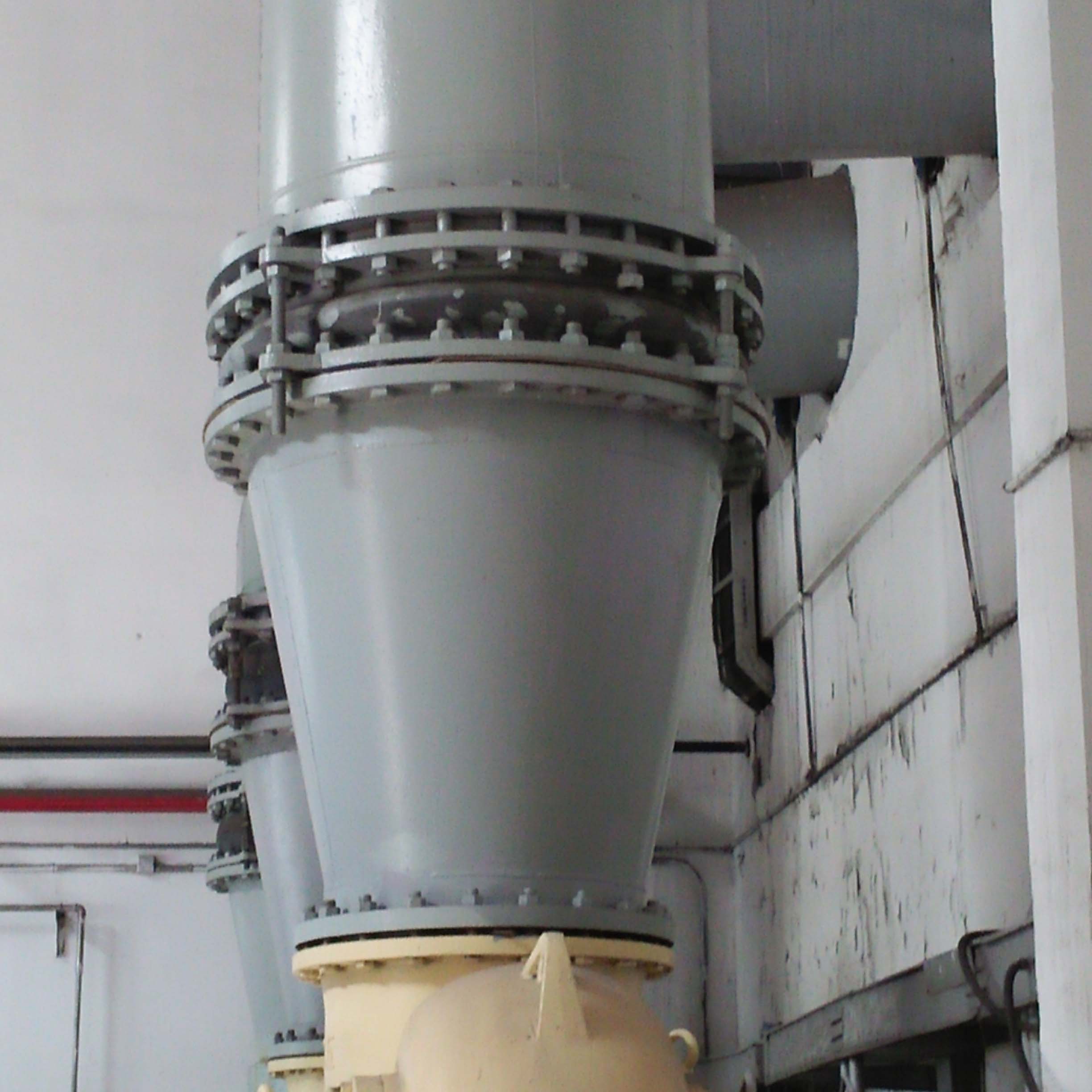
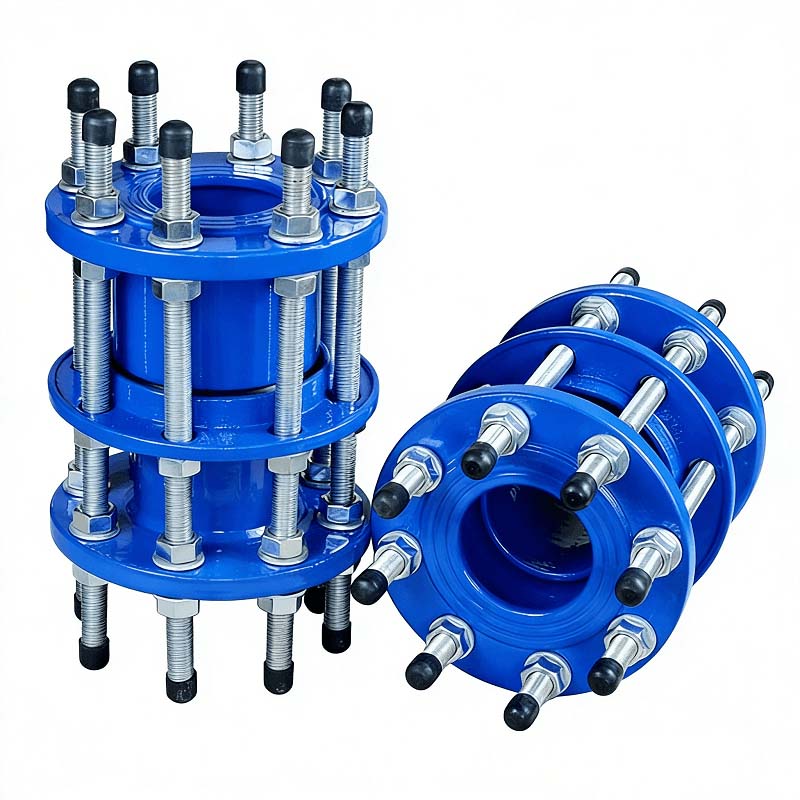
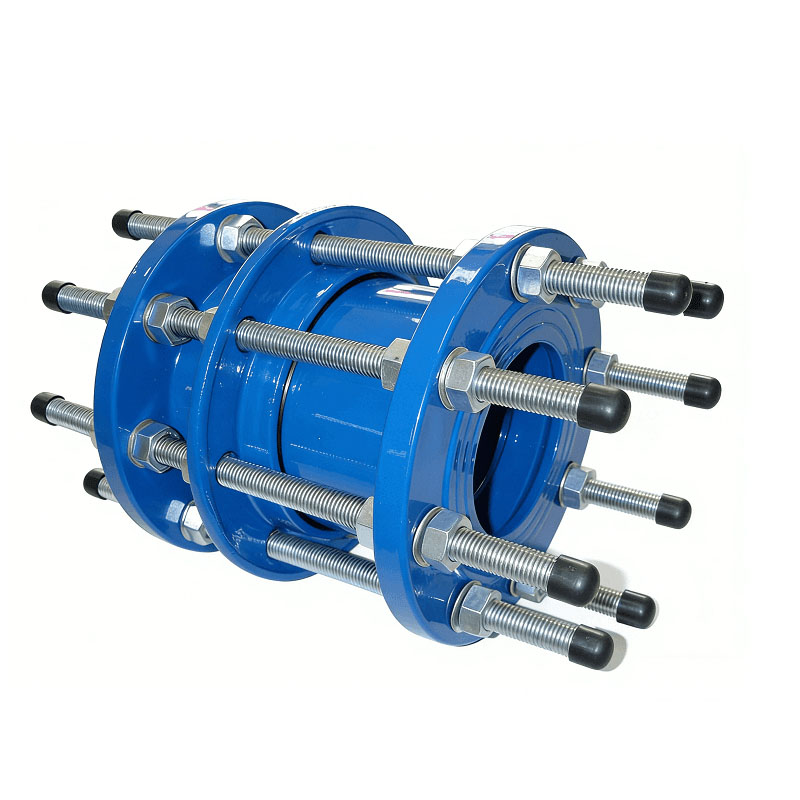
For installations where the piping layout cannot support solid, rigid concrete thrust anchors, the utilization of a fully restrained limit-type expansion joint is mandatory. High-tensile steel tie rods span the length of the bellows, locked into position via heavy-duty compression washers and double-nut limits. These rods transfer the hydrostatic end thrust back into the pipeline skeleton, preventing the flexible convolutions from stretching beyond their continuous elastic limit during high-pressure surges.
II. Eradication of Flange-Face Geometric Deficiencies
Leakage occurring at the flanged connections is frequently caused by uneven load distribution across the sealing gasket. Sourcing criteria should specify forged carbon steel (ASTM A105) or stainless steel flanges processed on advanced CNC machinery. The mating surface flatness error must be verified within a strict tolerance boundary ($\le 0.02\text{mm}$). This precision prevents localized gasket pinching and maintains uniform bolt torque retention across the entire sealing circumference.
III. Integration of Internal Flow Liners
For high-velocity gas lines (velocity $\ge 15\text{m/s}$) or liquid networks handling abrasive suspended particulates, the addition of an internal directional flow liner (sleeve) is required. The liner prevents direct fluid impingement against the inner crests of the bellows corrugations, eliminating localized erosion and preventing flow-induced harmonic resonance that can trigger sudden mechanical fatigue cracking.
4. QA Standards Compliance and Testing Frameworks
DEVEL industrial metallic expansion joints are engineered in strict compliance with the calculations and criteria established by the EJMA (Expansion Joint Manufacturers Association) codes, alongside ASME Section VIII, Div 1 and ASME B31.3 process piping guidelines. To ensure zero-leakage field deployment, every completed bellows assembly undergoes comprehensive factory testing before freight release. This includes certified batch metallurgical mapping, multi-ply thickness verification, continuous cyclic fatigue lifetime simulations, and a mandatory hydrostatic pressure validation up to 1.5 times the maximum system design pressure. Retaining and welding flanges are precision-machined to interface seamlessly with ASME B16.5, EN1092-1, or DIN drilling standards.
5. Engineering Consultation and Technical Review
DEVEL is an established manufacturer of critical fluid control and high-pressure metallic piping components, focusing on application-matched engineered solutions rather than stock catalog inventory. Our industrial engineering division provides complete technical submittal reviews, analyzing your piping network’s multi-axis thermal displacements, fluid velocity profiles, chemical concentration charts, and negative pressure margins to generate long-life multi-ply bellows configurations. Sourcing teams, project EPCs, and design institutes can transmit specialized data sheets and isometric system drawings directly to our technical division for structural evaluation and technical procurement estimation.