



In municipal district heating networks and cross-country industrial fluid transport lines, direct-buried infrastructure offers significant spatial advantages. However, installing flexible components within sub-grade environments introduces severe structural risks. Underground Buried Pipeline Compensators (direct-buried expansion joints) are continuously subjected to extreme environmental hazards, including non-uniform soil overburden pressure, dynamic surface traffic loads, high groundwater tables, and soil-friction resistance that locks bellow movement. Implementing an engineered heavy-duty structural protection system is mandatory to isolate these external forces and ensure the bellows expands and contracts within a friction-free boundary.
1. Sub-Grade Mechanical and Environmental Pain Points
Direct-buried piping networks operate under continuous soil-to-structure interaction parameters. Without an engineered external containment system, buried compensators experience catastrophic failure modes:
- Soil Friction Locking and Displacement Restraint: Direct backfill soil packs tightly around the convolutions of a bare metallic expansion joint. The resulting mechanical friction anchors the bellows in place, preventing it from absorbing the pipeline’s designed thermal expansion. This disruption in stress distribution leads to severe pipe buckling or upfront nozzle shearing.
- Dynamic Overburden and Traffic Loading: High static soil pressure combined with heavy dynamic vehicle loads from surface roads can induce severe structural deformation on unprotected bellows. Any distortion of the corrugation profile leads to localized stress concentrations and immediate rupture.
- Electrochemical Corrosion and Groundwater Infiltration: Underground aquifers, high water tables, and localized acidic/alkaline soil chemistries accelerate pitting corrosion and chloride-induced stress corrosion cracking (SCC) on hot stainless steel bellows, severely compromising pipeline asset lifecycles.
2. Technical Specifications Matrix: Structural Protection Framework
| Specification Item | Standard Engineering Values | Critical Sourcing & Design Compliance |
|---|---|---|
| Nominal Diameter (DN) | DN50mm to DN2000mm | Fully customizable casing profiles matching critical high-displacement axial expansion loops. |
| Structural Metallurgy | Heavy-Duty Carbon Steel (Q235B / Q355B) / Stainless Steel (SS304 / SS316) | Minimum wall thickness designed to resist deep-earth lithostatic pressure profiles. |
| Anti-Corrosion Wrapper | Multi-layer Epoxy Coal Tar Pitch / Fusion Bonded Epoxy (FBE) with Fiberglass Reinforcement | Engineered thermal stability ranging from -40°C to 120°C; resistant to chemical soil leaching. |
3. Core Technical Solutions of DEVEL Protection Systems
To insulate underground flexible connectors from mechanical loads and moisture infiltration, DEVEL incorporates a verified, field-proven containment design:
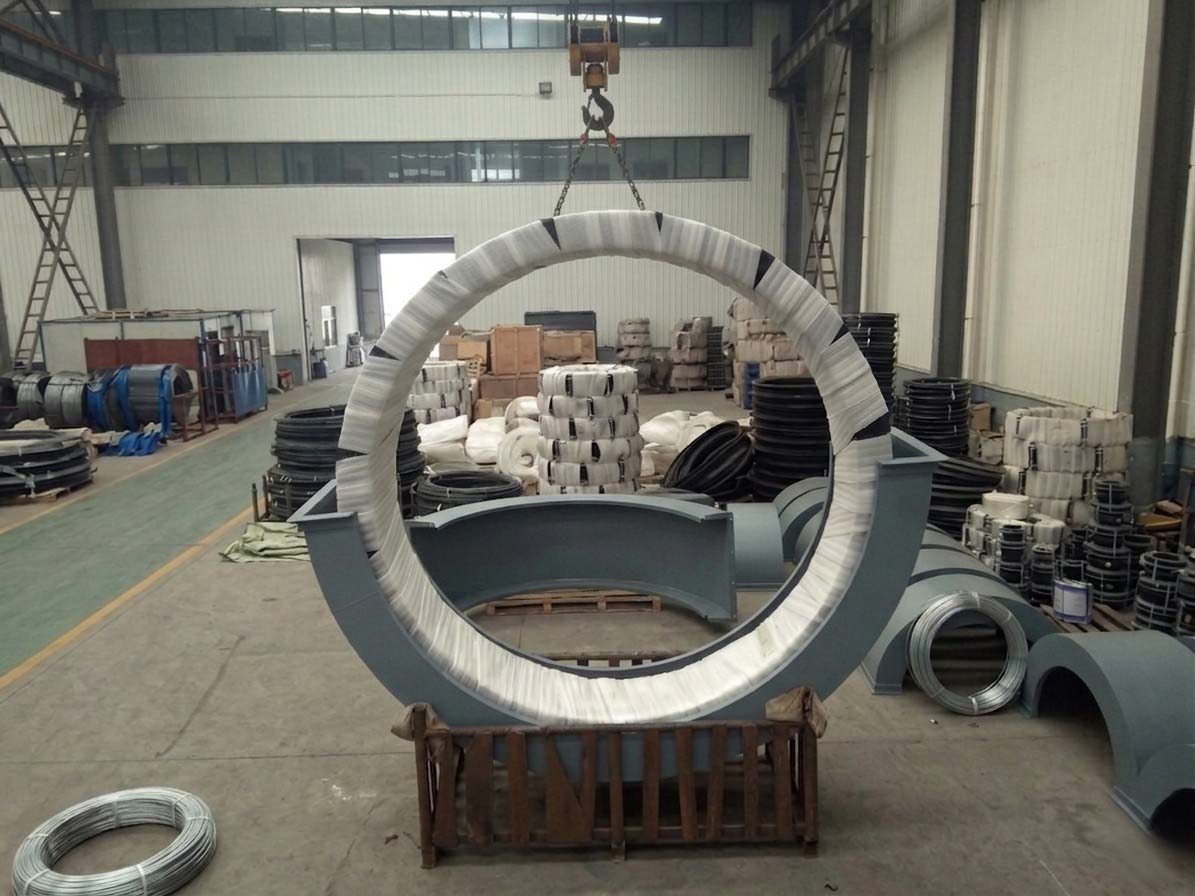
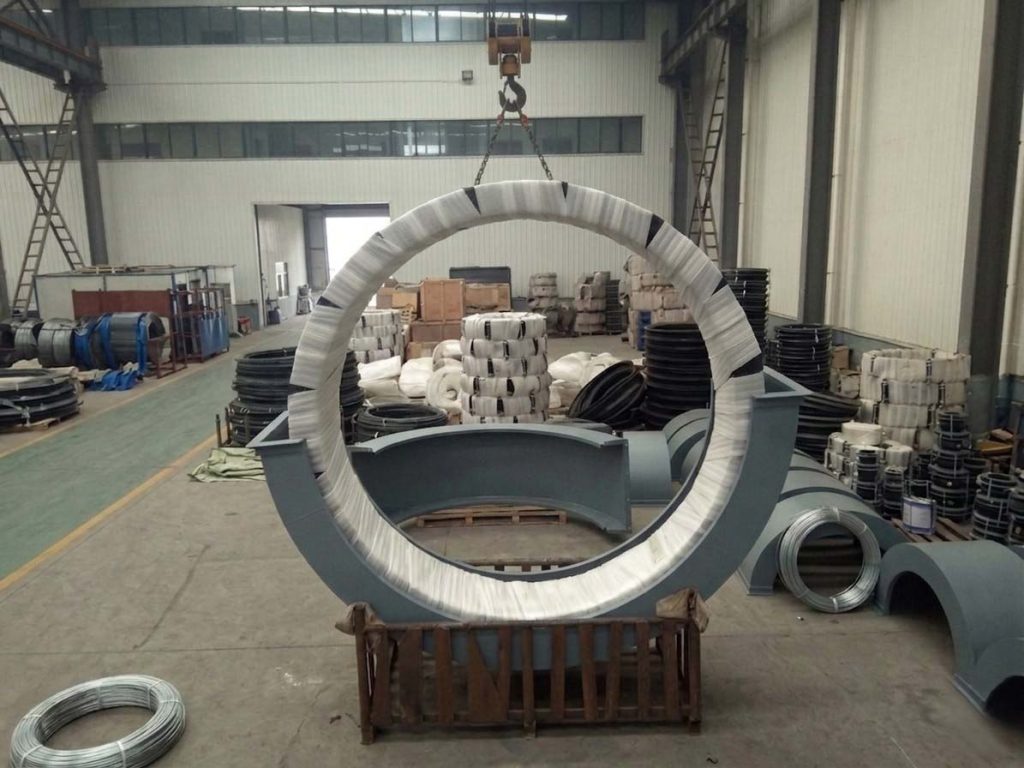
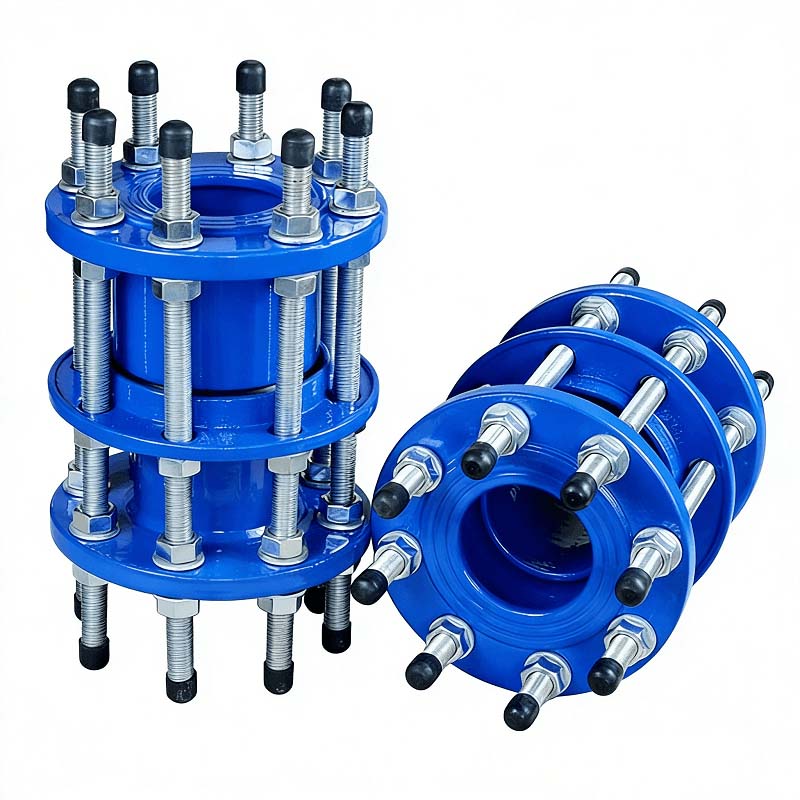
Split-Hollow Modular Shell Configuration: Our protection system features a dual semi-circular, split-case hollow design. This engineering geometry allows installation personnel to rapidly assemble the protective sleeve directly over completed pipe tie-ins without cutting existing pipe spools. Once bolted or seal-welded, it creates a rigid, isolated “Internal Cavity Chamber” that completely seals the compensator in a 100% soil-free environment, permitting unrestricted multi-axis thermal bellows displacement.
High-Performance Structural Load Bearing: Engineered with internal vertical reinforcing ribs and flat steel rider structures, the outer shell functions as a high-strength structural arch. It diverts heavy static earth overburdens and dynamic surface traffic wheel loads away from the flexible bellows element, transferring the forces directly into the consolidated surrounding backfill.
Industrial-Grade Multi-Layer Coating Architecture: Both internal and external steel boundaries are treated with heavy-duty anti-corrosion barrier coatings. The utilization of epoxy coal tar reinforced with interwoven fiberglass mats establishes an impermeable hydrophobic boundary, preventing groundwater ingress and mitigating galvanic corrosion risks over long-term sub-grade lifecycles.
4. Standardized Engineering Operating Procedure (SOP)
To guarantee the integrity of direct-buried pipeline assets, field installation teams must adhere strictly to standardized field deployment phases:
Phase 1: Precision Positioning Check: Complete the installation, alignment validation, and hydrostatic pressure testing of the internal compensator and carrier pipeline sections prior to shell enclosure.
Phase 2: Coating Integrity Audit: Perform a holiday detection or visual audit across both internal and external anti-corrosion coatings to ensure zero transport-induced micro-fissures exist on the protective substrate.
Phase 3: Split-Shell Assembly: Position the lower semi-circular module beneath the joint, align the upper protective cover mating flanges, and systematically torque the high-strength locking fasteners to design values.
Phase 4: Interface Joint Sealing: Apply industrial-grade anti-corrosion primers, specialized shrink sleeves, or mastic coatings over all bolt connections and longitudinal split-lines to finalize the hermetic environmental seal.
Phase 5: Calibrated Controlled Backfilling: Execute soil backfilling in uniform, measured layers ($\le 300\text{mm}$). Perform mechanical tamping on both sides of the structural protection shell symmetrically to ensure balanced sub-grade support and avoid localized structural shifting.
5. Technical Design and Procurement Collaboration
DEVEL is an established manufacturer of high-consequence fluid control structures and direct-buried pipeline mitigation components, prioritizing application-tailored engineering over mass catalog warehousing. Our technical design division performs complete technical submittal reviews, evaluating your pipeline network’s lithostatic overburden charts, water table profiles, chemistry matrices, and maximum axial thermal displacement lengths to manufacture optimal heavy-duty protector chambers. Engineering contractors, municipal heating project EPCs, and piping procurement leads can transmit specialized site data sheets and installation drawings directly to our technical engineering department for rapid structural compliance mapping and detailed technical estimation.
发表回复